


Our Services
Brochure
Download our document to see specific data of the service and how we work.
Let’s Start Work
Together
Please feel free to contact us. We will get back to you within 1-2 business days. Or just call us now.
How can we help?
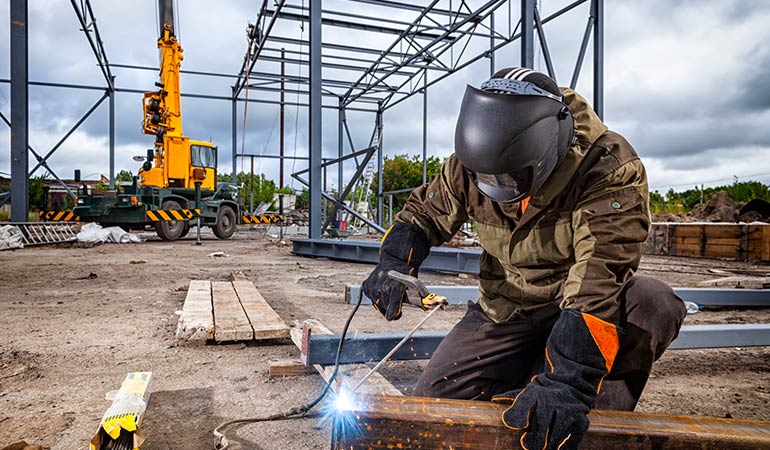
We set adequate standard in the construction industry playing a pivotal role in given our clients what they want meeting up with the economic standard. It encompasses a wide range of activities, from residential and commercial building projects to infrastructure development and renovation. As urbanization accelerates and technological advancements emerge, the construction sector is evolving, embracing innovative practices and sustainable methods to meet the growing demands of clients.
Stats & Charts
Our modern industrial engineers typically uses predetermined motion time system, computer simulation, along with extensive mathematical tools for modeling, such as mathematical optimization and queueing theory, and computational methods for dimensional analysis, evaluation, and optimization.

Key Areas Of Focus
We incorporate eco-friendly practices and materials, helping you build responsibly while minimizing environmental impact.
-
Residential Construction
The demand for housing continues to rise, driven by population growth and urban migration. Residential construction includes the development of single-family homes, multi-family units, and affordable housing solutions. Builders are increasingly focusing on energy-efficient designs and smart home technologies to enhance comfort and sustainability. -
Commercial Construction
This sector involves the construction of office buildings, retail spaces, and other commercial establishments. With the rise of e-commerce and changing work dynamics, commercial construction is adapting to new needs, such as flexible workspaces and eco-friendly designs that attract modern businesses. -
Renovation and Remodeling
As the existing built environment ages, renovation and remodeling projects are becoming increasingly important. This includes upgrading older structures for modern use, improving energy efficiency, and enhancing aesthetics, which can breathe new life into communities while preserving their historical significance.
Infrastructure is the backbone of any economy. Projects like roads, bridges, airports, and public transit systems are essential for connectivity and growth. The industry is prioritizing resilient and sustainable infrastructure to withstand climate change and serve communities effectively.
Building Information Modeling (BIM): This digital tool allows for better planning, design, and management of construction projects, reducing errors and enhancing collaboration.
These methods streamline the building process by assembling components off-site, which can reduce construction time and waste.
Incorporating eco-friendly materials and renewable energy sources is becoming standard. Green building certifications like LEED encourage sustainable construction practices, technologies are improving site surveys, monitoring progress, and enhancing safety measures, allowing for more precise and efficient operations.